Upgrading Your Solar System and Adding Panels on the Central Coast
Take a typical Central Coast home that put on a small system years ago — back when it covered the household comfortably and panels were dearer, so people bought less. Since then they have added air conditioning, a pool, maybe a second fridge, and there is talk of an electric car. The old system no longer keeps up, and the evening bills show it plainly. This is far and away the most common reason people look at upgrading rather than starting from scratch.
Working Out Whether to Upgrade
The first step is establishing exactly what you have and what you now need. An older system might be genuinely undersized for the current household, running a tired inverter near the end of its life, or both. The installer reviews the existing array, inverter and switchboard, then compares current output against your present usage. Sometimes the answer is simply more panels; sometimes it is a new inverter; often it is a sensible combination of the two staged together.
Adding Panels to an Existing Array
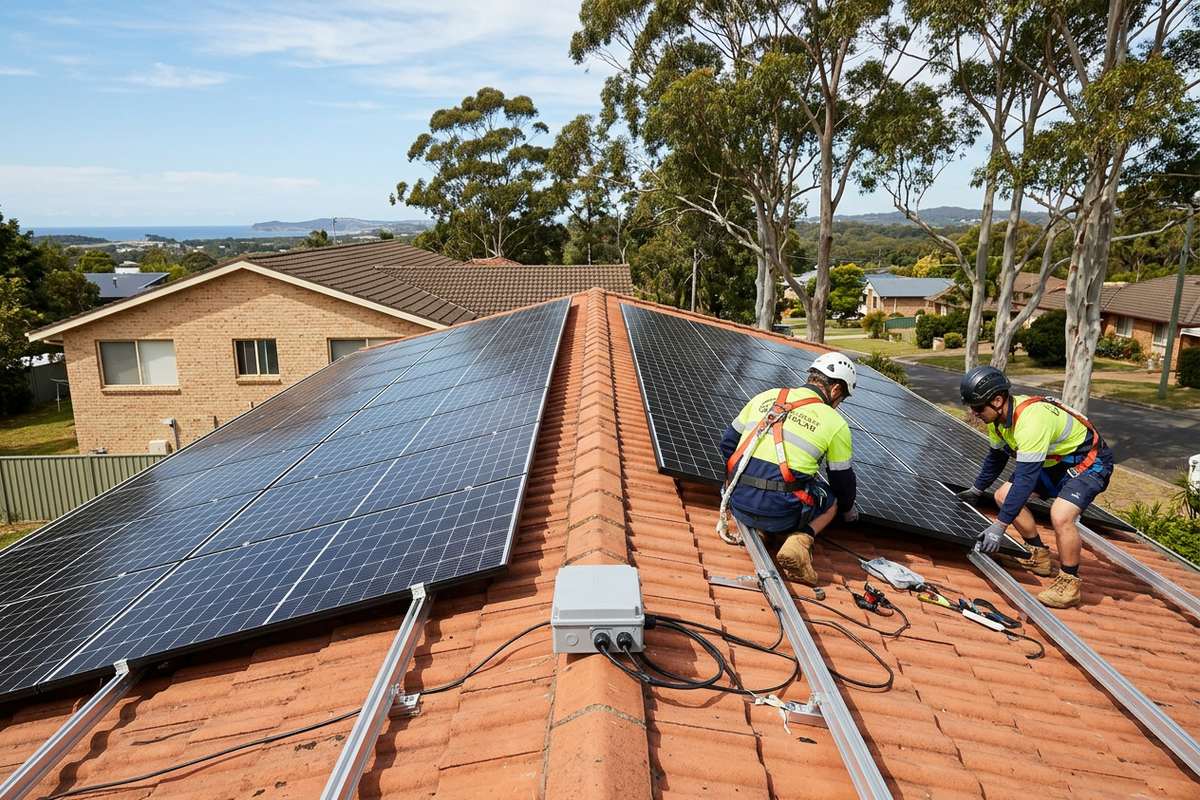
Where there is spare roof space and the inverter has headroom, adding panels is frequently the simplest and most cost-effective gain. The new panels are matched as closely as possible to the existing array and mounted on fresh rails, then tied in so the whole system works as one. If the current inverter is already near its capacity, expanding the array may mean upgrading the inverter at the same time so it can handle the extra generation.
Upgrading the Inverter
An ageing inverter is one of the most common limiting factors on an older system. Replacing it — often with a hybrid unit — can lift overall performance and, at the same time, open the door to adding a battery and more panels. It is frequently the single step that makes the rest of an upgrade worthwhile, turning a dated system into one ready for the next decade.
Checking the Switchboard Keeps Up
More generation, plus new loads like an EV charger or a battery, can push an older switchboard to its limits. Part of a well-planned upgrade is confirming the board has the capacity and the protection for the expanded system, and sorting it out if it does not. Getting this right is what keeps the whole setup safe, compliant and reliable rather than overloaded.
Staging the Work Sensibly
Not every upgrade has to happen at once. Where budget is a factor, the work can often be staged — for instance replacing the inverter with a hybrid now, adding panels next, and a battery later — provided the early steps are chosen with the end goal in mind. Planning the full picture upfront, even if it is built in stages, avoids paying twice to undo earlier decisions.
When Replacing Beats Upgrading
Expanding an existing system is usually the cost-effective path, but not always. If the panels are old and degraded, the inverter is at the end of its life, and the original install was marginal, good money can end up chasing bad. In those cases a fresh, properly designed system can deliver more for less than patching the old one. An honest installer will tell you when the existing setup is worth building on and when it is time to start clean.
What to Check Before Expanding
Before adding to an existing system, a few things decide whether expansion is even sensible. The inverter's spare capacity sets how many more panels it can take without being replaced. The roof needs genuine unshaded space for the new panels to be worth installing. The switchboard has to have room and the right protection for the extra generation and any new loads. And the age of the existing array matters, since matching brand-new panels to a tired old set has limits. A short assessment covers all of this and tells you plainly whether you are adding to a sound system or propping up one that has had its day.
Frequently Asked Questions
What changes after an upgrade?
More of your usage is covered by your own generation, so less is imported in the evenings and as your loads grow. A well-planned upgrade is sized for where your household is heading, not just where it is today.
Can I add any panels to my old system?
New panels are matched to the existing array as closely as possible, but exact models change over the years. The installer confirms compatibility and whether the inverter can take the extra before going ahead.
Is upgrading better than a whole new system?
It depends on the age and condition of what you have. If the bones are sound, expanding is cost-effective; if the inverter and panels are well past their prime, a fresh system can be the better value. You will get a straight assessment either way.
Can the work be done in stages?
Often, yes — provided each stage is chosen with the final system in mind. Staging spreads the cost while avoiding decisions that have to be undone later. Your installer can map out a sensible order.
Outgrown Your Old Solar System?
Whether it's more panels, a new inverter, or both, a local licensed installer can assess your existing Central Coast system and plan an upgrade that keeps up with your home. Chat with our team for a free assessment.