How to Size a Solar System for Your Central Coast Home
Wondering whether the system in that quote is actually the right size for your home? It is the single most important question in the whole job — and the one most likely to be answered with a guess or a round number. Get the sizing right and the system quietly pays its way for years; get it wrong and you either export power for a pittance or keep buying it back at full retail every evening.
What Does the System Need to Cover?
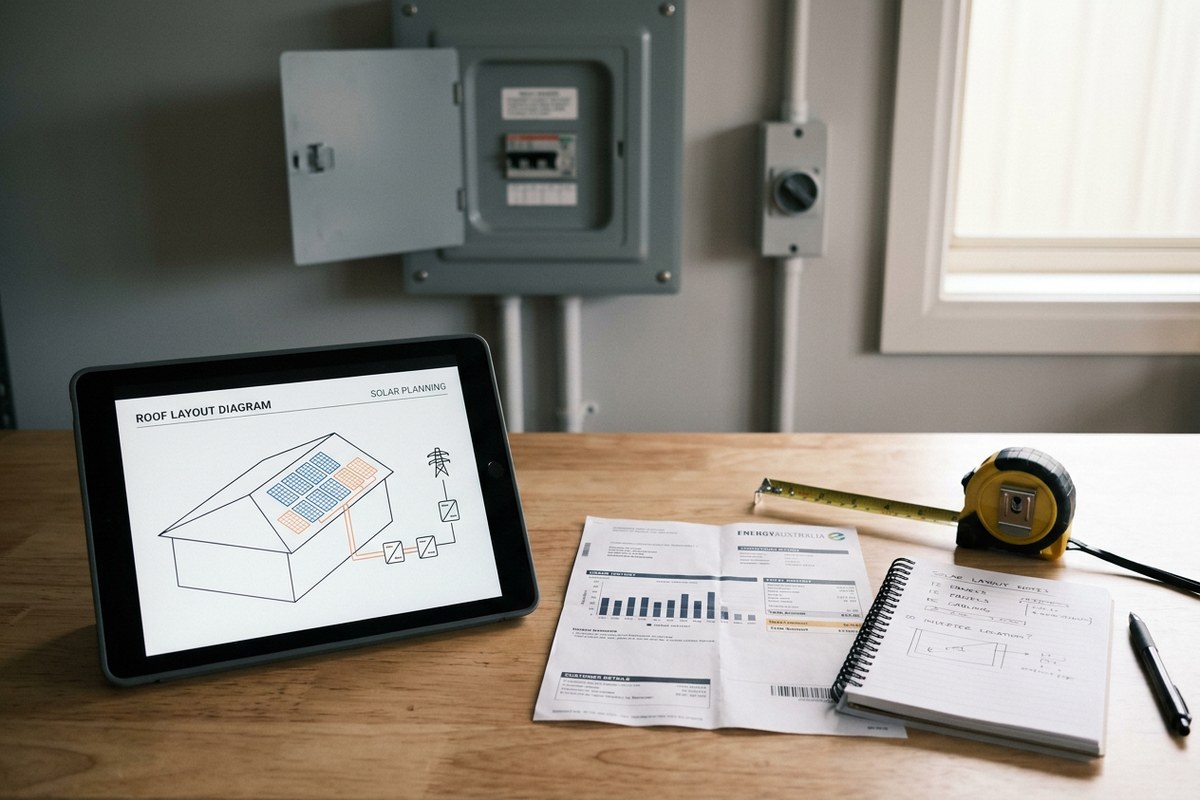
Sizing starts with your actual consumption, not a rule of thumb pulled from the size of your house. A recent power bill shows how many kilowatt-hours you use and, just as importantly, roughly when you use them. A household that sits empty all day and comes alive at night has a very different ideal system from one with someone home, a pool pump cycling through the afternoon, or an EV plugged in during daylight. The design follows the usage — that is the whole principle.
How Much Roof Do You Have to Work With?
The roof sets the ceiling on what is possible. Usable area, orientation and shading decide how many panels physically fit and how well they perform once they are up. North-facing roof space generates the most across a full day; east and west split production toward morning and afternoon, which can actually suit a household that uses most of its power at those ends of the day. A good designer maps the array to your particular roof rather than forcing a number to fit a price.
Are You Planning a Battery or an EV?
What is coming matters as much as what is here now. If a battery or an electric car is anywhere on the horizon, it changes the ideal size today — usually toward a slightly larger array and a hybrid-ready inverter — so you are not paying to redo the system in two years. Building a little headroom in at the design stage is far cheaper than retrofitting it once everything is already on the roof.
Why Bigger Isn't Automatically Better
It is tempting to assume the biggest system you can fit is the best value, but an oversized array that exports most of its production for a low feed-in tariff is money sitting on the roof doing very little. An undersized one leaves you importing expensive grid power every evening. The sweet spot matches generation to how and when you actually use power. That is exactly why your bill and your daily pattern drive the design, not the square metres of empty roof.
Where Feed-In Tariffs Fit In
Exporting surplus solar still earns something, but feed-in rates are modest compared with what you pay to import. That economic gap is the reason self-consumption matters so much: every kilowatt-hour you use as your panels make it is worth far more than one you sell back. Good sizing aims to maximise what you use yourself, with export as a bonus rather than the goal.
What a Good Design Shows You
A design worth the name is not just a price and a panel count — it shows you the proposed array laid out on your roof, the expected annual generation, how much of your usage it is projected to cover, and the panel and inverter brands behind those numbers. Seeing it on paper lets you sanity-check the system against your own bill before committing, and it is the clearest sign you are dealing with someone designing for your home rather than reading off a package list.
Frequently Asked Questions
What will a well-sized system change about my bills?
It shifts as much of your daily usage as possible onto your own generation, so you import less at full retail price. The aim is the biggest realistic dent in your bill for the system you have paid for — not the biggest possible array.
Can the system grow with my household?
Yes, if it is designed for it. Leaving roof space and choosing an inverter with headroom means panels can be added later without starting over. Tell your installer what might change down the track so it is planned in from the start.
What do you need from me to size it accurately?
A recent power bill and a rough picture of your day — when you are home, what runs and when, and what is coming, like an EV or a battery. From that and an assessment of your roof, the system can be sized with confidence.
Is there a downside to undersizing to save money?
A cheaper, smaller system costs less upfront but covers less of your usage, so the savings are smaller too. It can be a false economy if you end up wanting to expand within a couple of years. Sizing it right the first time usually works out better.
Want a System Sized to Your Actual Usage?
Send us a recent power bill and we will design a system that matches how your Central Coast home really uses power — no oversize sales targets, no guesswork. Chat with our team for a free, no-obligation design.