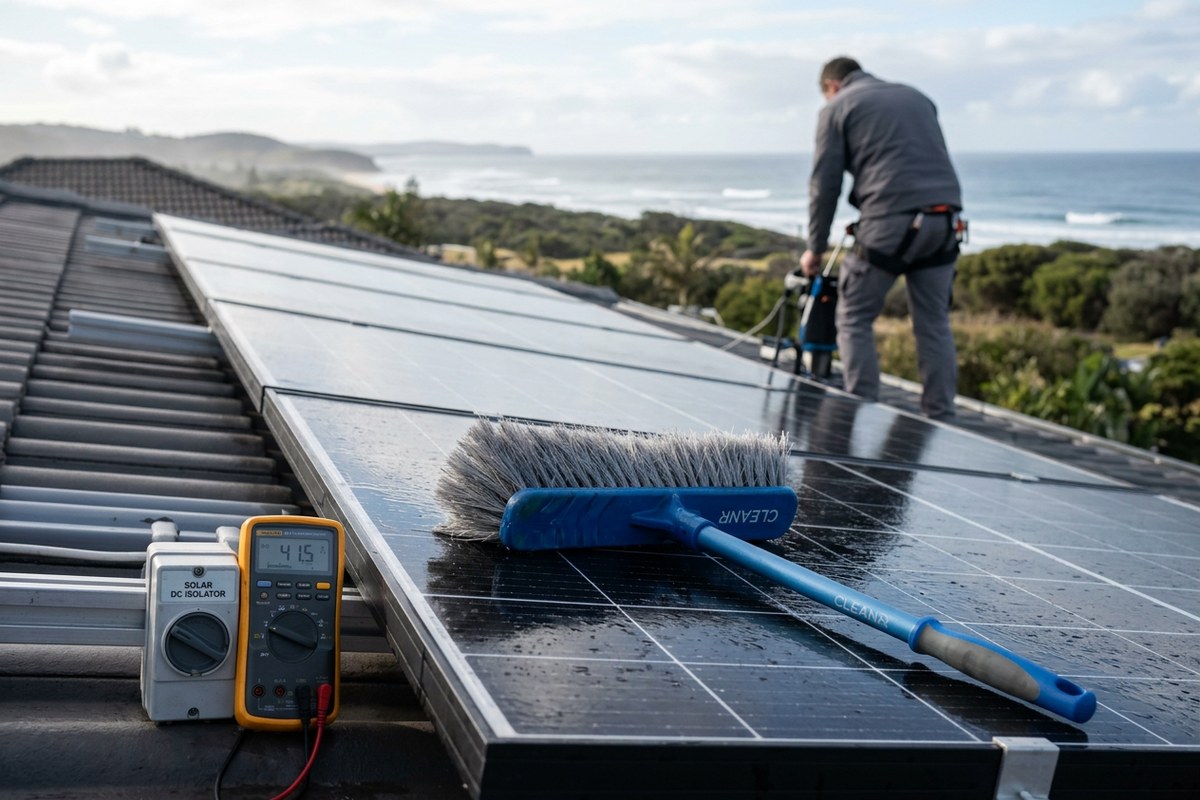
Solar Panel Maintenance and Servicing on the Central Coast
Solar systems are often treated as fit-and-forget, and to be fair they are mostly low-maintenance — but low-maintenance is not the same as no-maintenance. Output drifts down quietly over the years, and because there are no moving parts to fail loudly, plenty of homeowners never notice until a bill creeps up or a quarterly statement looks wrong. On the coast, the conditions that cause that drift are a little harsher than they are inland.
Problem: Output Drops Without You Noticing
A solar system does not usually stop working all at once. Soiling on the glass, new shade from a tree that has grown, a quietly faulting inverter, or a dropped string can each shave a slice off your production. Without monitoring, the first real sign is often a higher bill months later. Solution: a periodic check compares what the system is actually making against what it should be making for the conditions, so a problem is caught while it is still small and cheap to fix.
Problem: Coastal Air Is Tough on Hardware
Salt-laden air near the water works steadily on mounting hardware, frames and any components not rated for the conditions. Left unchecked over years it shows up as corrosion on fixings and fittings. Solution: a service inspects the mounting, frames and isolators for corrosion and confirms everything is still secure and sound — the kind of wear that is cheap to address early and genuinely expensive to ignore until something works loose.
Problem: Dirty Panels in a Dry Spell
Central Coast rain keeps most panels clean enough for most of the year, which is why aggressive cleaning is rarely needed. But panels under trees, near busy roads, or coated in bird droppings can lose meaningful output in a long dry stretch. Solution: a professional clean, done safely from proper roof access rather than by hosing hot glass from the ground, restores production without risking thermal-shock damage to the panels.
What a Service Actually Covers
A proper service is a good deal more than a wipe-down. It takes in a visual inspection of the panels and mounting, a check of the inverter and any logged fault history, a performance test against expected output for the day, and a look over the isolators and visible wiring for wear. You come away knowing whether the system is healthy or exactly what needs attention — and roughly what it is costing you in lost generation if something is off.
When to Book One In
There is no need to service solar constantly, but a periodic check makes sense — and certain triggers should bring one forward. A jump in bills, a monitoring app showing less than usual, visible dirt or new shading, an inverter warning light, or simply never having had the system looked at since install are all good reasons. Catching a fault early is almost always cheaper than discovering it after a year of quietly reduced output.
What You Can Do Yourself
Between professional services there is a little you can do without going near the roof. Get familiar with your monitoring app and glance at it now and then — a sudden drop or a flatlined day is the earliest warning of a fault. Keep an eye on bills for an unexplained creep upward, and note any inverter warning lights. Spotting a change early and booking it in beats discovering a year of lost output after the fact.
Why Coastal Systems Need a Closer Eye
A solar system a few streets back from the water lives a harder life than the same system inland. Salt carried on the air settles on frames, fixings and the edges of panels, and over years it works on anything not properly rated for the conditions. Coastal homes also tend to cop more wind-driven grime and, near trees, more leaf litter and bird traffic. None of this means coastal solar is a bad idea — it performs superbly here — but it does mean the inspection side of maintenance carries a little more weight than a clean inland roof, and catching corrosion or loose fixings early is well worth the look.
Frequently Asked Questions
What's the process for a service visit?
The installer reviews your monitoring or meter data, inspects the array and inverter, performance-tests the system, and reports back on what they found — clean, repair, or replace — with no pressure to do more than is genuinely needed.
How do I know if my system needs a look?
Rising bills, a monitoring app showing less than usual, visible dirt or shading, an inverter warning, or simply not having had it checked since install. Any one of these is reason enough for an inspection.
Should I clean the panels myself?
Better not to. Hosing hot panels can crack the glass through thermal shock, and walking on them causes damage and real safety risk. Cleaning is done safely with the right access as part of a service.
How often should solar be serviced?
There is no rigid schedule, but a periodic check every few years suits most systems, brought forward if any of the warning signs appear. Coastal homes and panels under trees benefit from a closer eye than a clean inland roof.
System Not Performing Like It Used To?
A local licensed installer can inspect, test and service your Central Coast solar system — and find the output you didn't know you'd lost. Chat with our team to book a health check.