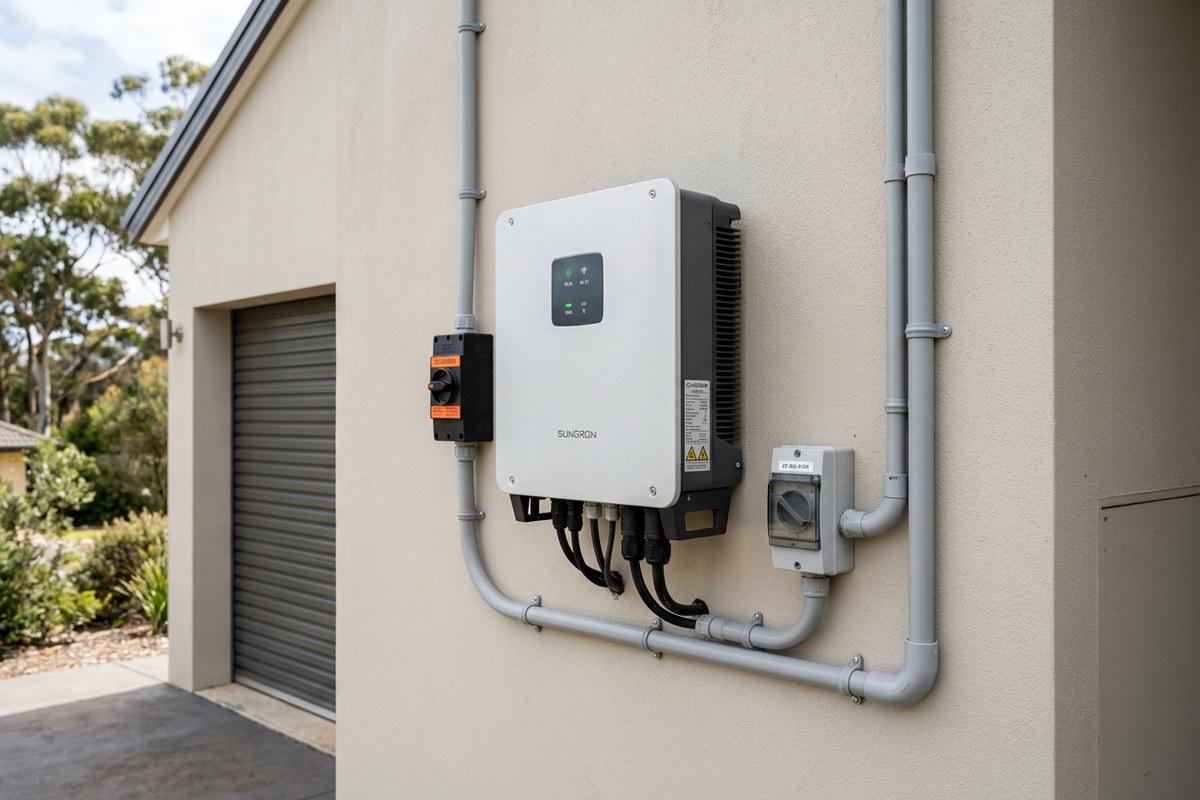
Solar Inverter Installation and Replacement on the Central Coast
The inverter is the part of a solar system that turns the DC power your panels make into the AC power your home actually uses. It is also the hardest-working component in the whole setup, and usually the first to wear out — panels can run for decades, but an inverter is built on the understanding that it will be replaced partway through the system's life. Understanding the types helps you choose well at install and recognise when an existing one is on the way out.
String Inverters
The common, cost-effective choice and the right call for many homes. One central unit handles the whole array, mounted on a wall near the switchboard. On a simple, unshaded roof with a single main orientation, a string inverter does the job well for the lowest cost. Its limitation is that the connected panels perform together, so heavy shading on one part of the array can drag down the rest. On the right roof, that limitation never bites.
Microinverters
These sit underneath each panel, so every panel works independently of its neighbours. On a roof with shading through part of the day, dormer windows, or panels facing several different directions, microinverters stop one compromised panel pulling the others down, and they give you panel-by-panel monitoring so a fault is easy to pinpoint. They cost more than a string setup, but on a complicated roof they genuinely earn the difference.
Hybrid Inverters
A hybrid does everything a string inverter does and is also built to manage a battery. If storage is anywhere in your plans — even a few years out — a hybrid now saves having to replace the inverter when the battery arrives. For most households that might add storage within the system's life, it is the sensible default rather than an upsell.
Signs Yours Needs Replacing
Inverters typically age out well before the panels do. The tell-tale signs are fault codes or warning lights on the unit, frequent dropouts where the system drops offline, a system quietly producing noticeably less than it used to, or an older unit the manufacturer no longer supports with parts or firmware. A replacement is matched to your existing panels so the whole system performs to its potential again, rather than being held back by one tired component.
What Happens During a Replacement
A like-for-like swap is a contained job: the DC side is isolated safely, the old unit is removed, the new inverter is mounted and wired in, then commissioned and certified. Where the original was installed years ago, the replacement is brought up to current standards, which can mean small additions to isolation or labelling. A good installer explains any of this upfront so there are no surprises on the invoice.
Where the Inverter Should Live
Siting matters more than people realise. An inverter runs cooler and lasts longer mounted in a ventilated spot out of direct western sun — a garage wall or shaded side of the house rather than baking on a north-west exterior all afternoon. On the coast it also wants to be away from the worst of the salt air where practical. A few degrees cooler across years of operation is free life added to the hardest-working part of your system.
Matching the Inverter to Your Panels
An inverter and an array need to be sized to work together. Fit an inverter that is too small for the panels and you clip output on the brightest days, leaving generation on the table; fit one too large and you have paid for capacity the array will never feed. A sensible design pairs the two within a ratio that suits your roof and climate, often with a slight, deliberate oversizing of the array relative to the inverter because panels rarely hit their full rated output in real conditions. When an inverter is replaced rather than installed fresh, this match is checked against the existing panels so the new unit complements what is already on the roof instead of bottlenecking it. It is the kind of detail that separates a considered replacement from a like-for-like swap that quietly underperforms.
Frequently Asked Questions
Is replacing an inverter safe as a simple swap?
It is electrical work on a live-capable system and must be done by a licensed installer, with the DC isolated correctly and the new unit commissioned and certified. It is not a DIY task — done properly it is straightforward, done wrong it is dangerous.
Will a new inverter need to meet current standards?
Yes. A replacement is installed to the current grid-connection rules, which may mean minor upgrades to isolation or labelling compared with an older setup. A good installer handles this as part of the job.
Can I switch inverter type when I replace it?
Often, yes — for example moving to a hybrid so you can add a battery later. Compatibility with your existing panels and switchboard is checked first, and the installer will tell you straight whether the change is worth it for your system.
Why does an inverter wear out before the panels?
It is constantly converting power and managing heat, with electronics that work hard every daylight hour for years. Panels have no moving parts and degrade slowly; the inverter carries the active load, so it is the component designed to be serviced or replaced over time.
Inverter Playing Up, or Time for an Upgrade?
If your solar output has dropped or your inverter is showing faults, a local licensed installer can diagnose it and recommend the right replacement for your Central Coast system. Chat with our team for a free assessment.