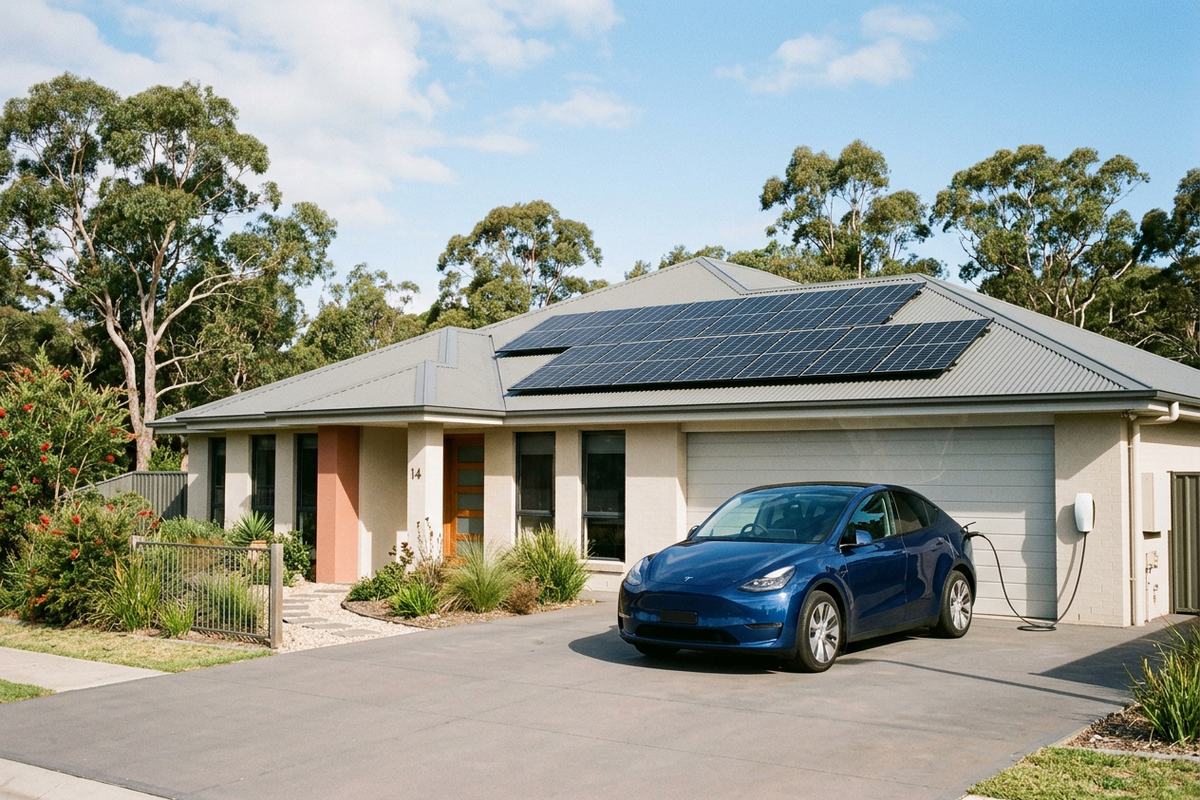
Pairing Solar With an EV Charger on the Central Coast
An electric car parked in the driveway all day, a roof making power it is exporting for a few cents a unit — and the two not talking to each other. It is a missed opportunity that a solar-aware setup fixes neatly. Done right, your car runs largely on sunshine your home would otherwise be selling back to the grid at a fraction of what it is worth.
Why Charge From Solar at All?
The economics are simple and hard to argue with. Power you export earns a low feed-in tariff; power you buy back later to charge the car costs full retail. Charging the car directly from your own daytime generation skips that gap entirely — you are spending your cheapest power on one of your bigger loads. For a household that can plug in during daylight, it is one of the best uses of a solar system there is.
What Makes a Setup 'Solar-Aware'
A solar-aware charger watches what your roof is producing and what the house is drawing, then directs the surplus into the car rather than the grid. Some let you charge purely on excess solar, so the car only sips when there is genuine surplus; others top up from the grid when there is not enough sun and you need the range. The result either way is a car filling up on the cheapest power available at the time.
Designing the Solar Side for an EV
An EV is a significant new load — often comparable to adding another household's worth of consumption — so it changes the ideal system. A roof that comfortably covered the house may need a few more panels to also feed a car without simply pulling everything from the grid. If solar and the charger are planned together, the array is sized for both from the outset and the wiring is laid out cleanly. If solar is already in place, the system is assessed to see what it can realistically support.
Adding a Battery to the Mix
Pair a solar-aware charger with a battery and you can charge the car from stored solar after dark, not only during daylight hours. It is not essential, but for households that can only plug in at night it extends how much of the car's charging genuinely comes from the roof rather than the grid. Whether it stacks up financially depends on your routine and how much you drive.
Planning Ahead Even Before the Car Arrives
If an EV is likely but not here yet, it is worth designing the solar side and pre-planning the charger wiring now. Leaving the array sized with headroom and a conduit path ready means adding the charger later is a tidy, low-fuss job rather than a retrofit that disturbs a finished install. The charger itself is electrical work a licensed installer handles when the time comes.
Charging Speed: Solar vs the Grid
Charging purely on surplus solar is the cheapest way to fill the car, but it is paced by what the roof is making at the time, so on a cloudy day or a short winter afternoon it is slower. Allowing a grid top-up trades a little of that saving for guaranteed range when you need to leave early. Most solar-aware chargers let you choose per session, so you can run on sun when there is no rush and top up when there is.
Do You Need a Battery to Charge on Solar?
A common misconception is that charging a car from solar requires a home battery. It does not. If you can plug in during daylight, a solar-aware charger sends surplus generation straight to the car as it is made — no battery involved. The battery only matters if you mostly charge after dark, when there is no sun to draw from; then stored solar can fill the car overnight instead of grid power. So the question is really about your routine: daytime chargers get most of the benefit from solar alone, while night-only chargers are where a battery starts to earn its place in the setup.
Frequently Asked Questions
What will I notice once solar and the charger work together?
More of your car's charging quietly comes from the roof during the day, and less of it shows up as imported power on your bill. On sunny days the car can fill almost entirely on surplus solar.
Do I need a bigger solar system for an EV?
Often a little larger, yes — a car adds meaningful demand. How much depends on how far you drive and when you charge. It is worked out as part of the design rather than guessed.
Can my existing solar feed an EV charger?
Usually, with a compatible charger and sometimes a small amount of extra wiring. The system is assessed first to confirm what it can support and whether adding panels is worthwhile.
Is it better to charge on solar only or top up from the grid?
That depends on your driving. Solar-only charging is cheapest but slower and weather-dependent; allowing a grid top-up guarantees range when you need it. Many setups let you switch between the two to suit the day.
Got an EV, or One on the Way?
A solar-aware setup charges your car from your own roof instead of exporting it cheaply. Talk to a local licensed installer about pairing solar and EV charging on the Central Coast — chat with our team for a free design.