Battery-Ready Hybrid Solar Systems on the Central Coast
Picture installing solar this year, then deciding in two years' time to add a battery — and being told the inverter you just bought cannot run one, so it has to be replaced first. It is a frustratingly common situation, and an entirely avoidable one. The fix is deciding upfront whether your system should be battery-ready, even when the battery itself is a purchase for later.
The Problem: Systems That Can't Grow
A standard string inverter does exactly one job — convert solar to AC for the house and the grid. It has no way to charge or discharge a battery. Add storage later and you are looking at one of two paths: replacing the inverter with a hybrid, or bolting on a separate AC-coupled battery that brings its own inverter. Both work and both are done all the time, but both cost more than simply planning for storage from the start.
The Solution: A Hybrid, Battery-Ready Design
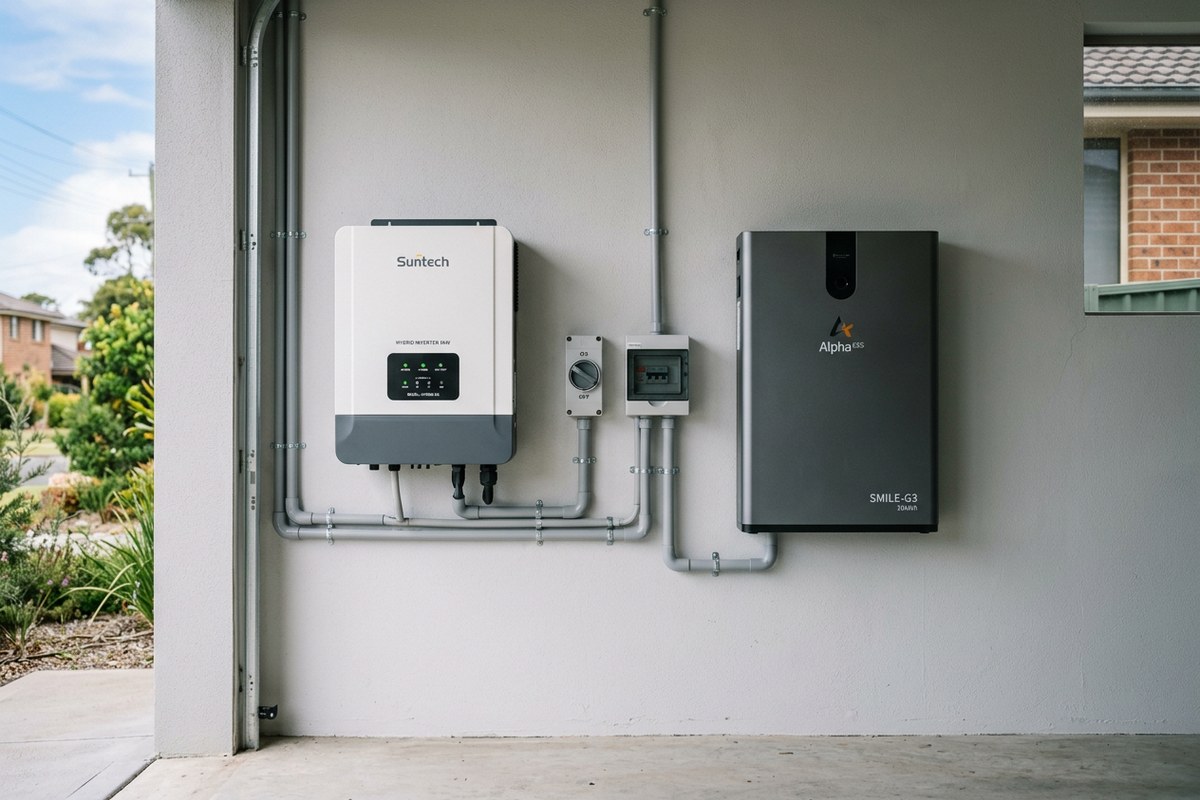
A hybrid inverter handles your solar today and is built to manage a battery whenever you choose to add one. Choosing it at install means the future battery becomes a clean bolt-on — wire it in, configure it, done — rather than a partial rebuild of a system that is only a couple of years old. The hardware costs a little more upfront and tends to save considerably more down the track.
What 'Battery-Ready' Actually Means
It is more than just the inverter on the wall. A genuinely battery-ready install leaves physical space where the battery will sit, runs or stubs the cabling it will eventually need, and sizes the solar array large enough to charge it as well as run the house. Done properly, the groundwork stays invisible until the day the battery turns up and slots into a spot that was waiting for it.
Is It Worth It for You?
If a battery is anywhere in your thinking — for covering evening usage, for blackout backup, or to store surplus instead of exporting it cheaply — battery-ready is almost always the smarter path. If you are genuinely certain you will never add storage, a simpler system may suit you better and cost less. The honest answer depends on your plans, and it is a conversation worth having before the design is locked in rather than after.
Storing Surplus Instead of Exporting It
The case for storage often comes down to the same economics as sizing: power you export earns a low feed-in rate, while power you pull from the grid at night costs full retail. A battery lets you keep the day's surplus and spend it in the evening at your own cost rather than the grid's. Whether the numbers stack up depends on your usage, but designing the system so storage is an easy yes later keeps the option genuinely open.
Backup Power During an Outage
One reason people go battery-ready is blackout backup. With the right hybrid inverter and battery, parts of your home can keep running through a grid outage and even recharge from solar during the day. Not every battery setup provides backup by default — it has to be specified — so if riding out an outage matters to you, flag it early. A battery-ready system at least keeps that option on the table for when you add storage.
Hybrid Now vs a Separate Battery Inverter Later
There are two honest ways to end up with battery storage, and it is worth understanding both. The first is a hybrid inverter installed with your solar from the start, so adding the battery later is a straightforward connection to hardware already built for it. The second is keeping a standard inverter now and bolting on an AC-coupled battery later, which brings its own separate inverter alongside the original. The AC-coupled route works and can suit a retrofit, but it means two inverters on the wall and generally a higher total cost than choosing a hybrid once. For anyone fairly likely to add storage, paying a little more for the hybrid upfront is usually the cleaner and cheaper path over the life of the system.
Frequently Asked Questions
What makes a battery-ready system cost more upfront?
Mainly the hybrid inverter, which is dearer than a basic string unit, plus a little extra labour to leave space and run cabling for the future battery. The trade-off is avoiding a far larger cost when you add storage later.
Does battery-ready lock me into one battery brand?
Not necessarily, but it is worth checking. Some hybrid inverters pair with a wide range of batteries while others are more restricted. A good installer picks an inverter that keeps your options open down the track.
Can my existing solar be made battery-ready?
Sometimes — it depends on the current inverter. If it is already hybrid-capable you are most of the way there; if not, an AC-coupled battery is usually the path. Your installer can check what your particular system needs.
Do I have to add the battery soon to make it worthwhile?
No. The point of battery-ready is that there is no deadline — the system runs perfectly well on solar alone, and the storage slots in whenever it suits you and the numbers feel right.
Planning for a Battery Down the Track?
A battery-ready hybrid system now means you add storage later without redoing the install. Talk to a local licensed installer about designing your Central Coast system the right way from day one — chat with our team for a free design.